
By Jo Ann Gramlich, MS, CCC-SLP
Have you ever noticed how young children want to hear the same story again and again, sing the same song on repeat, or play the same game every day?
While adults may be ready to move on to something new, children often thrive on repetition. Those familiar experiences are doing important work behind the scenes, such as helping children learn, remember, communicate, and build confidence.
Repetition Helps Learning Stick
Young children learn through repeated experiences. Each time they hear a familiar word, practice a new skill, or return to a favorite activity, they have another opportunity to strengthen what they are learning.
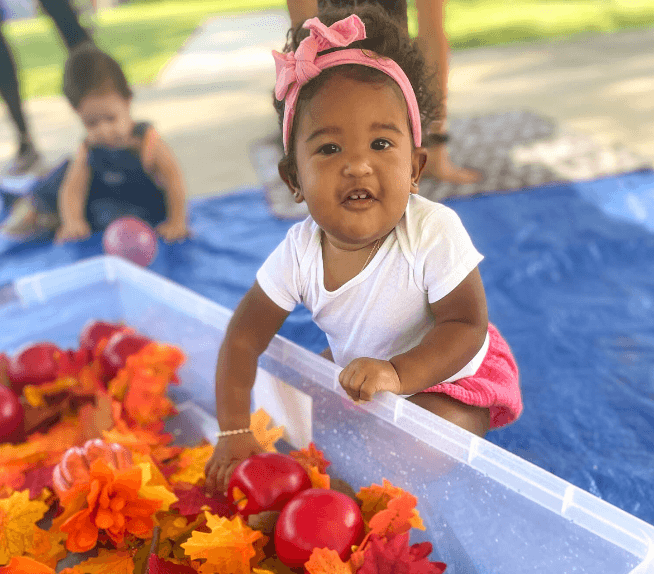
Something as simple as playing with the same fall sensory bin several times can offer new learning each day. A child may first explore the leaves and apples with their hands. The next time, they may begin noticing colors or textures. Later, they may use words such as red, apple, leaf, soft, or more.
The activity may be the same, but the learning continues to grow.
Familiarity Builds Confidence
Repetition also gives children the comfort of knowing what comes next.
Think about a favorite book. After hearing it several times, a child may begin filling in a familiar word, making a sound at just the right moment, pointing to a favorite picture, or “reading” part of the story from memory.
That feeling of I know this can be incredibly motivating.
Repetition Supports Language Development
Children need many opportunities to hear and use words before those words become part of their everyday vocabulary.
Everyday routines naturally provide this repetition. Getting dressed, preparing meals, taking a walk, cleaning up toys, reading together, and playing favorite games all give children opportunities to hear familiar language in meaningful situations.
You don't need to constantly create new activities. Instead, talk about what you're already doing together.
If your child is playing with leaves, you might say:
“Crunchy leaf!”
“Look at the red leaf.”
“More leaves!”
“The leaves are falling down!”
Simple words and phrases repeated naturally during play can make a big difference.
Favorite Activities Are Worth Repeating
When your child asks for the same book, song, or game for what feels like the hundredth time, remember: repetition isn't wasted time. It's learning.
So read that favorite story again. Sing the song one more time. Play the familiar game.
Because sometimes the experiences that seem repetitive to us are exactly the experiences helping a young child learn and grow.
Talk, Play & Read Tip
Repeat it, then add a little more.
If your child says, “Apple,” you might respond, “Red apple!”
If your child says, “Leaf,” you might say, “The leaf is falling!”
By building just a little on what your child already knows, you can support language development naturally, one familiar moment at a time.
Looking for more simple ways to build language and learning into everyday moments? Explore Talk, Play, & Read.